Before Your Trip to Japan
How to Use Chopsticks, Japanese Table Manners & Little Tips Locals Appreciate
A friendly guide from a small chopstick engraving service in Tokyo. Read it on the plane, or save the free PDF on your phone.
Get the free guidebook (PDF)Updated November 2026 · About 10 minutes to read
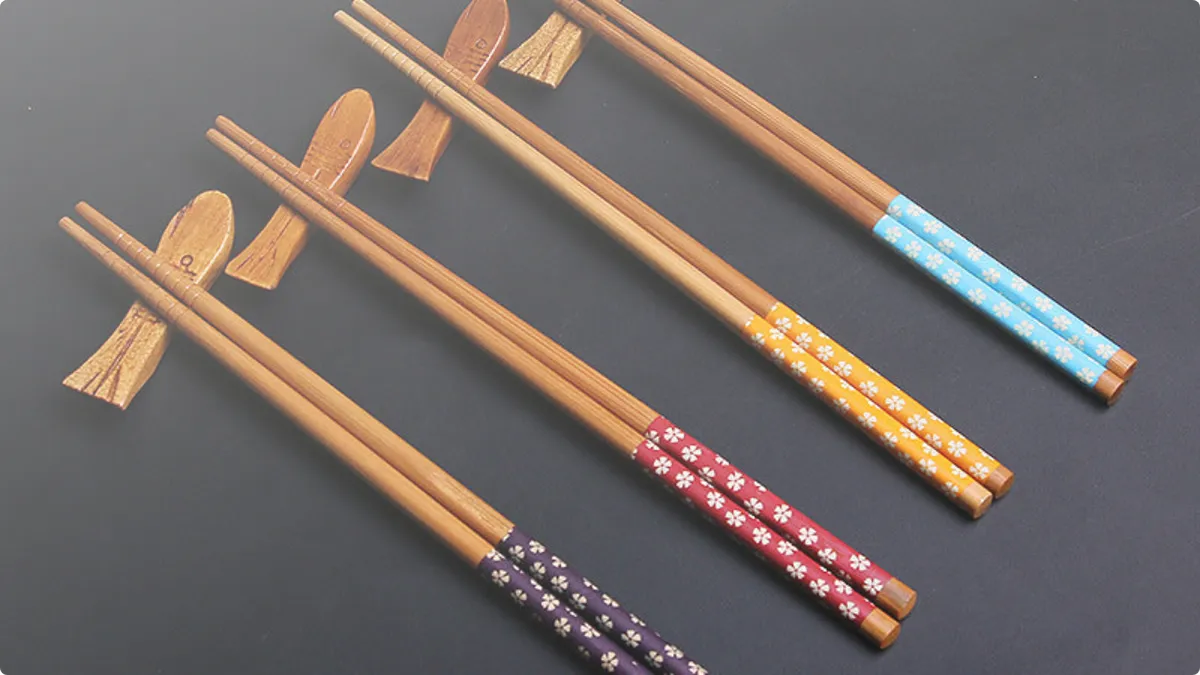
Planning your first trip to Japan? Good news: you don't need perfect chopstick skills to enjoy the food. What people notice is not whether you do everything right, but whether you show a little respect.
We engrave names on chopsticks in Tokyo every day, so chopsticks are a big part of our lives. This is the guide we would give to a friend before their first trip.
The short version: 5 things to remember
- Hold the bottom chopstick still and move only the top one.
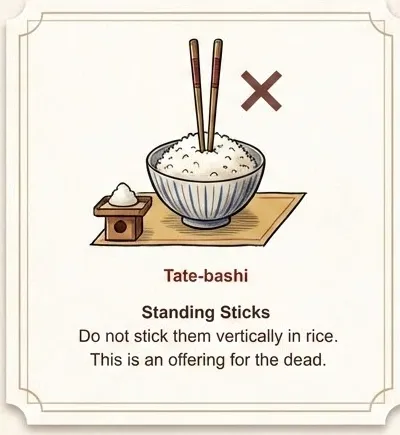
- Never stand chopsticks upright in a bowl of rice.
- Never pass food from your chopsticks to someone else's chopsticks.
- When you pause, put your chopsticks on the chopstick rest, not across your bowl.
- Say "Itadakimasu" before eating and "Gochisousama" after. A little Japanese goes a long way.
Respect Matters More Than Perfection
Many visitors worry about making mistakes at the table. Honestly, no one in Japan expects travelers to know every rule. People are usually happy to see you trying.
In our experience, a few words of Japanese, even a clumsy "Arigatou gozaimasu", change the mood right away. Many Japanese people feel they should help when someone asks them for help, and a polite try at their language makes them want to help even more. So don't be shy: ask, smile, and say thank you.
Use a translation app. It's not rude, it's smart.
Many travelers are surprised that English is not widely spoken in Japan. Life in Japan runs almost entirely in Japanese, and most people rarely use spoken English, so many feel shy or unsure about speaking it, even when they understand some.
You don't need to speak Japanese either. Start with "Sumimasen" (excuse me), then show your question on a translation app. Most people will happily help, and your trip becomes much easier and more fun.
If you remember the two chopstick taboos below and show a little respect, you will already have the essentials covered.
How to Hold Chopsticks in 4 Steps
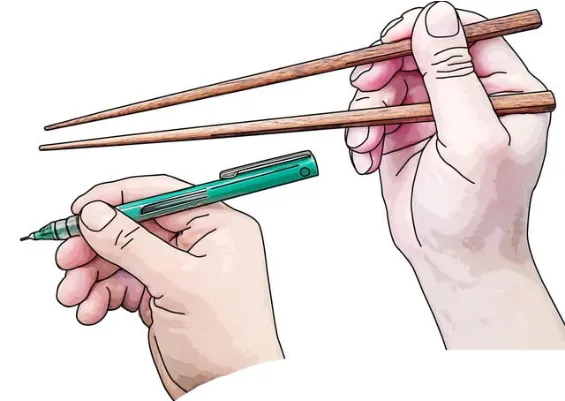
- The pencil grip. Take one chopstick and hold it exactly like a pen, with your thumb and index finger.
- Middle finger. Rest that chopstick on your middle finger. This is the one that moves.
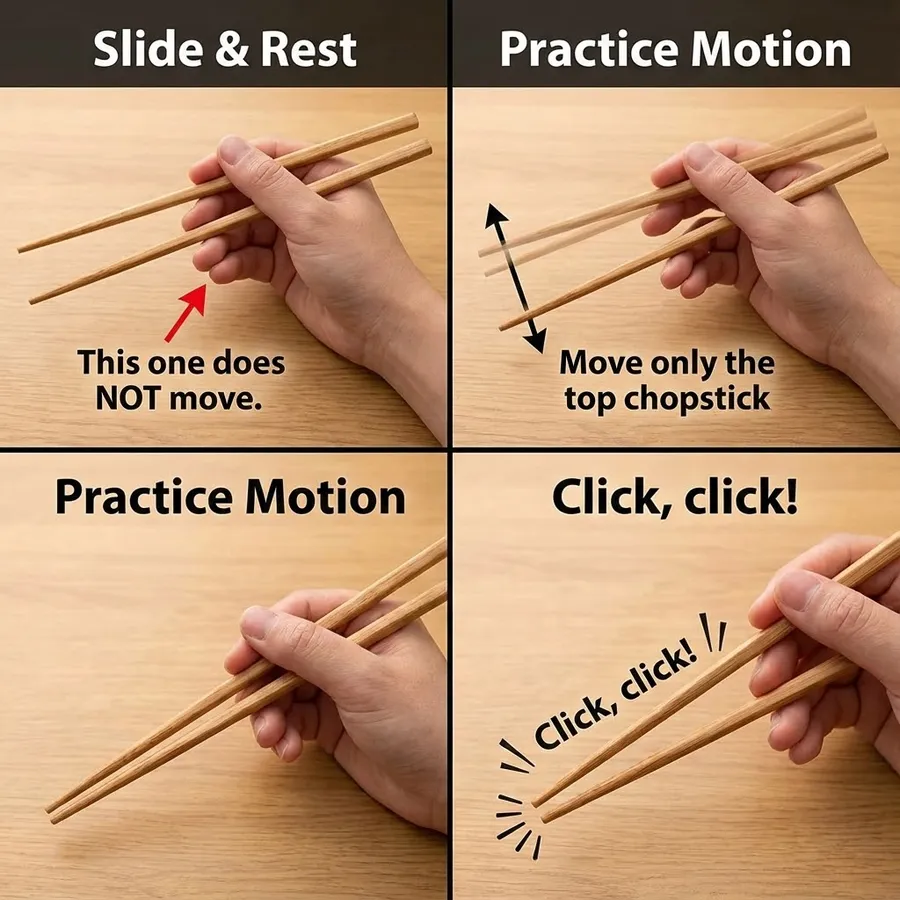
- The base. Slide the second chopstick under the first and rest it on your ring finger, held by the base of your thumb. This one does not move.
- Practice the motion. Move only the top chopstick up and down until the tips meet. Click, click! Tap the tips on the table to line them up.
Tips for beginners
- Hold the chopsticks about one third from the top end, not too close to the tips.
- Left-handed? Simply mirror the same steps. There is no rule against using your left hand.
- Struggling at a restaurant? It's fine to ask for a spoon or a fork. Many places that serve visitors have them.
- Find your size with the "1.5 rule" (hito-ata). Open your thumb and index finger in an L shape, measure the distance between the tips, and multiply by 1.5. That is a comfortable chopstick length for your hand.
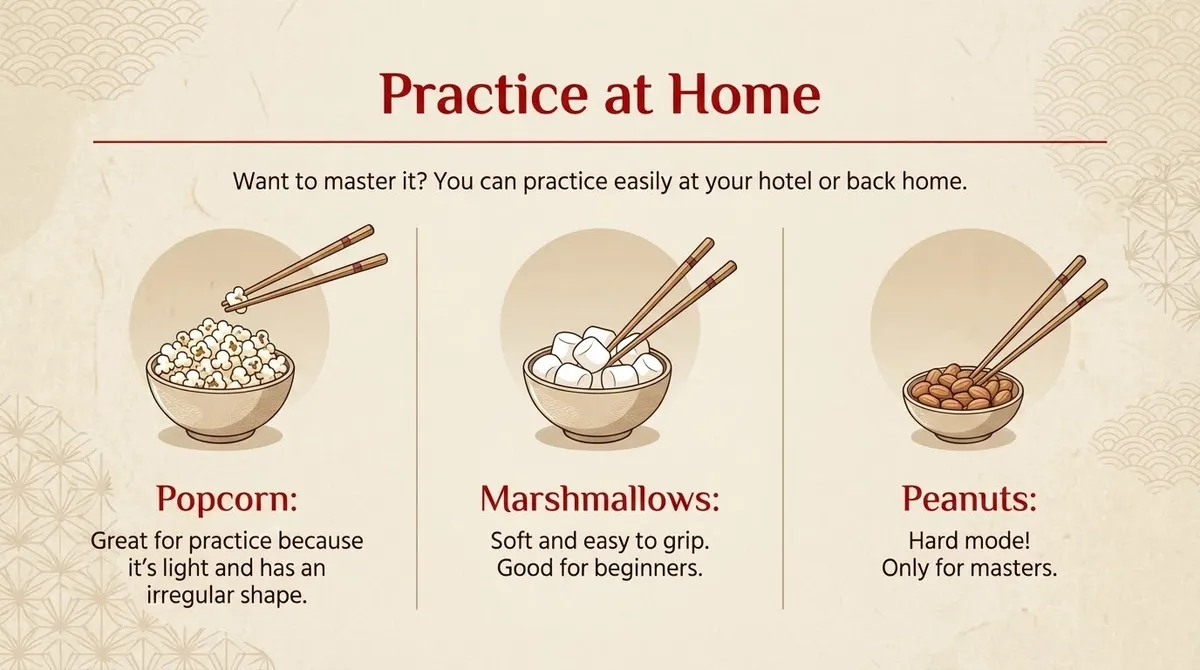
Practice before your trip. Start with marshmallows (soft and easy), move on to popcorn (light and irregular), and try peanuts when you feel ready. For a real challenge in Japan, try Konpeito, tiny Japanese sugar stars.
Chopstick Taboos in Japan
Most chopstick "rules" are simply good table manners. But two of them are linked to Japanese funeral customs, so they can make people uncomfortable. Please remember these two first.
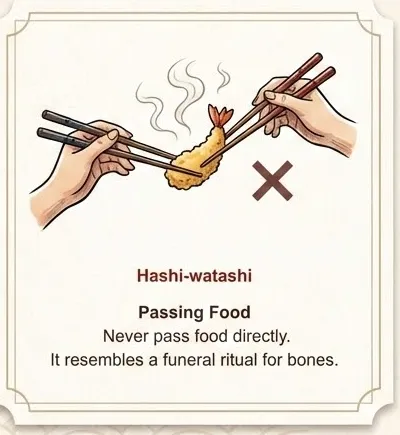
Please don't "cheers" with food. We often see travelers pick up a piece of food with their chopsticks and touch it to a friend's piece, like clinking glasses. It looks like the chopstick-to-chopstick passing above, and above all it looks like playing with food. Many Japanese people strongly dislike playing with food, so this can leave a bad impression. Save the "cheers" for your drinks!
A few more everyday manners:
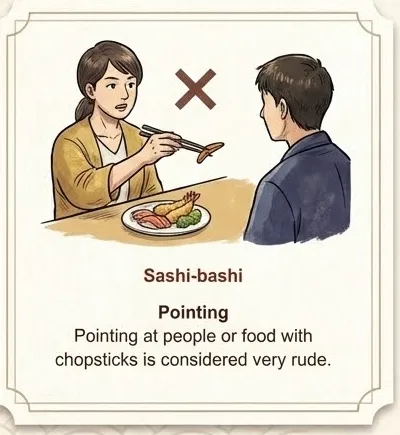
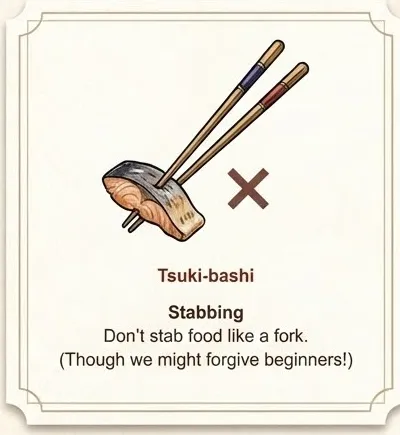
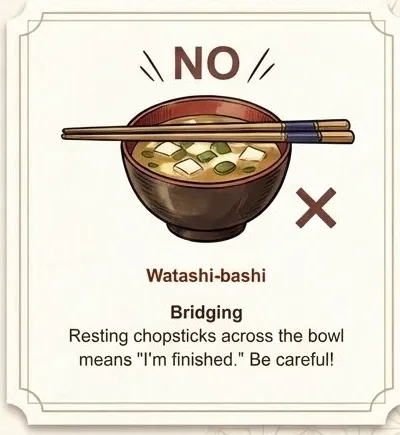
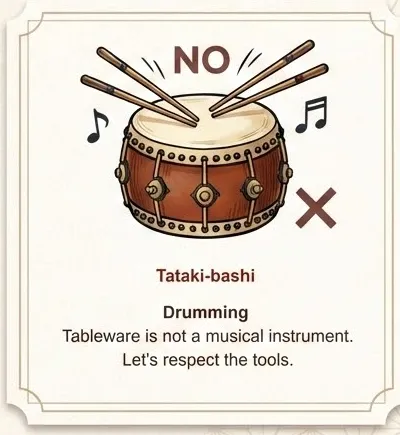
- Hovering over the dishes while deciding what to take (mayoi-bashi) and licking your chopsticks (neburi-bashi) are also best avoided.
- Shared dishes: use the serving chopsticks if there are some, or ask for a small plate.
- Disposable chopsticks: rubbing them together can suggest they are cheap. If there is a splinter, remove it quietly.
The Chopstick Rest (and a Paper-Sleeve Trick)
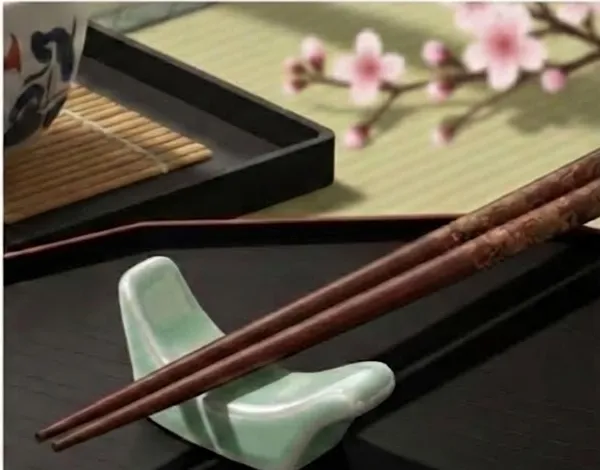
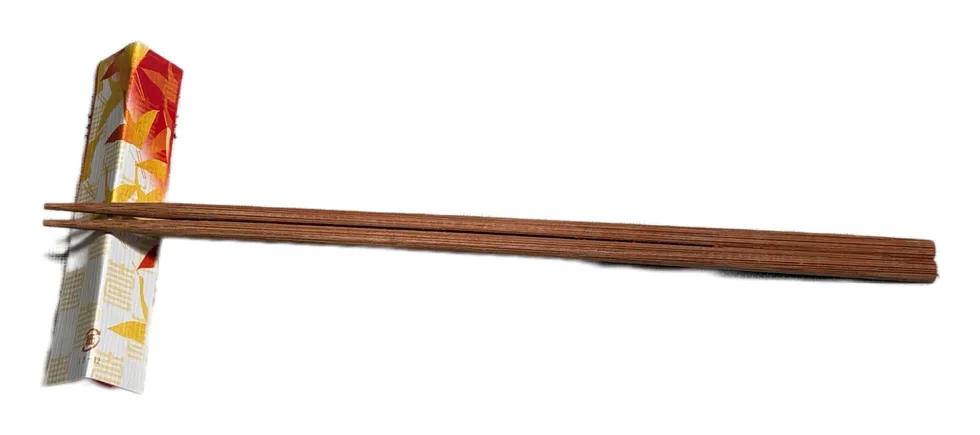
When you take a break, place your chopsticks on the chopstick rest (hashi-oki) so the tips don't touch the table. Lay them side by side in front of you, with the tips pointing to the left.
No rest? Make one. Casual restaurants often give you chopsticks in a paper sleeve (hashi-bukuro). Fold the sleeve in half lengthwise, then fold it in half crosswise, and you have a little rest. It keeps the tips clean and shows respect for your meal.
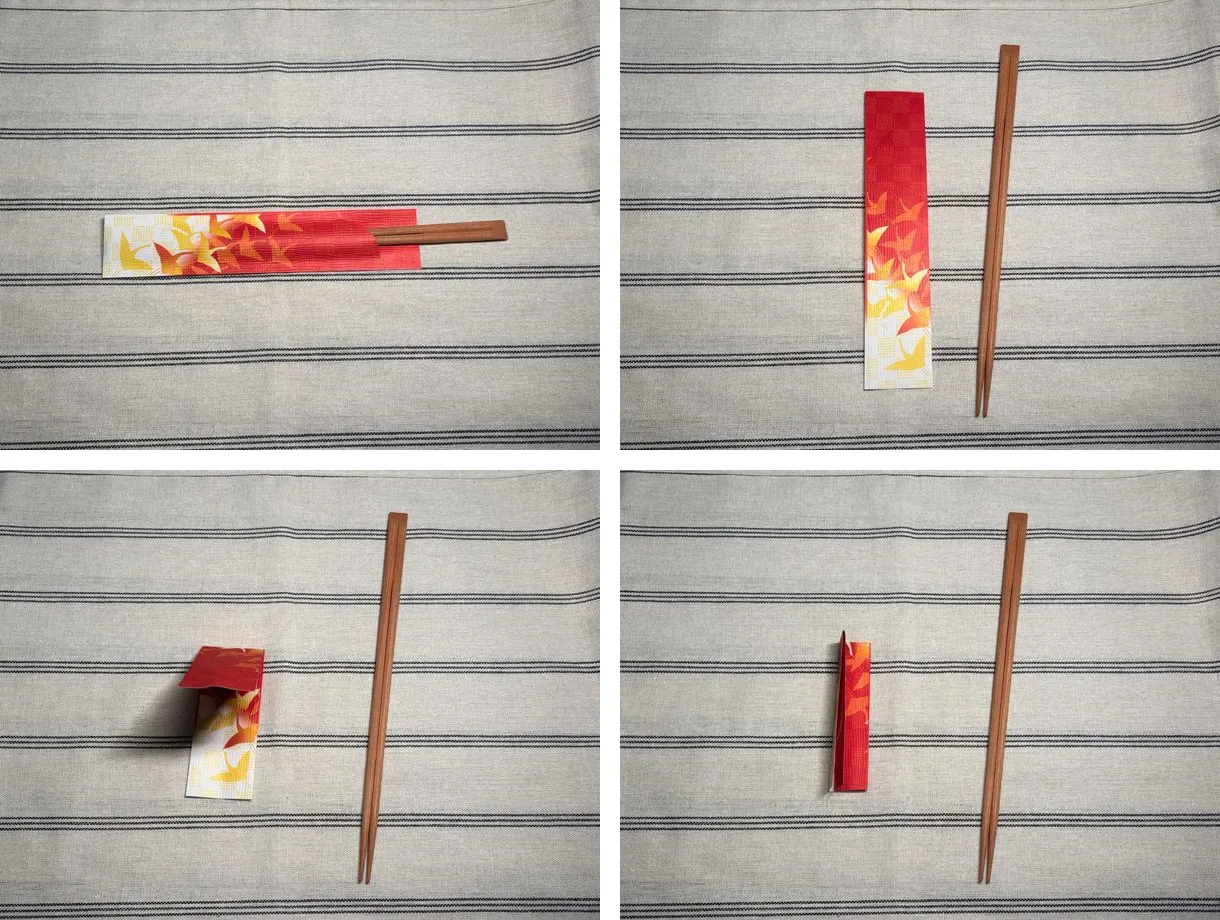
Itadakimasu & Gochisousama
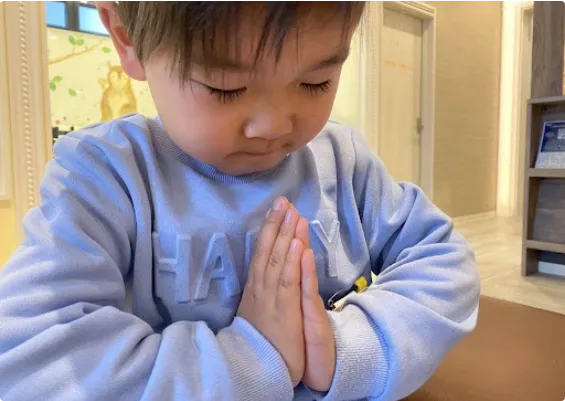
"Itadakimasu" (ee-tah-dah-kee-mas) is said before eating, often with your hands together. It means "I humbly receive", a thank-you to the plants and animals that became our food, and to everyone who made the meal.
"Gochisousama" (go-chee-so-sa-ma) is said after eating, to thank the people who prepared it. "Gochisousama deshita" is more polite, but "Gochisousama" is perfect. Try saying it when you leave a restaurant. It is a friendly way to thank the staff.
At Restaurants: Calling Staff and Ordering
- Calling the staff is normal, not rude. Raise your hand and say "Sumimasen!", or press the call button on the table if there is one. Staff won't come by to check on you as often as in many Western restaurants, so calling them is how it works.
- Picture menus make ordering easy. Most restaurants have a menu with photos. Point at the dish and say "Kore kudasai" (this one, please). That's all you need.
- Want to know more about a dish? Ask with a translation app. Asking questions is welcome.
- Japanese-only menus are common at small local places. Don't let that stop you. Use your translation app's camera, or ask the staff. Most people will kindly explain.
- Search in Japanese on Google Maps. Searching "best sushi" in English often shows places full of tourists. Try the Japanese words, like 寿司 (sushi), ラーメン (ramen) or とんかつ (tonkatsu), to find where locals eat.
- Don't stop at convenience-store meals. Konbini food is great, but ending your trip with only konbini meals would be a real waste. The best part of Japan is waiting in its small restaurants.
Japan Is a Food Lover's Country
Japan is one of the best places in the world to eat, and not only for Japanese food. Tokyo has had more Michelin-starred restaurants than any other city for many years, and Kyoto and Osaka are also among the cities with the most stars in the world.
You don't need a big budget, either. The Michelin Guide also lists many Bib Gourmand restaurants: good food at reasonable prices. See the official MICHELIN Guide Tokyo and its Bib Gourmand list.
Why slurping noodles is a good thing. Slurping is normal with ramen, udon and soba, and it actually changes the taste. Air mixed in with the noodles cools them so you can eat them hot, and it brings out the aroma. Some people compare it to the way wine tasters draw air into their mouths.
Little Travel Tips Locals Appreciate
- Learn three words. "Sumimasen" (excuse me / sorry, also to call staff), "Onegaishimasu" (please, when ordering or asking) and "Arigatou gozaimasu" (thank you).
- Ask for help, with a translation app. Station staff, shop staff and people on the street are usually glad to help, even with very little English.
- Lift small bowls. Bringing a rice bowl or miso soup bowl close to your mouth is good manners. Drinking miso soup straight from the bowl is normal.
- Sushi can be eaten with your hands. Hands or chopsticks are both fine for nigiri.
- No tipping. Good service is part of the price. Leaving money on the table can confuse staff.
- Shoes off when you see a step up at the entrance or slippers lined up: in homes, traditional inns, some restaurants and temples.
- Quiet on trains. Talk softly and avoid phone calls.
- Carry a small bag for trash. Public bins are hard to find, so most people take their trash back with them.
Why Chopsticks Matter in Japan
In Japan, chopsticks are more than tools. They are linked to three ideas:
Everyone Has Their Own Pair
In most Japanese homes, every family member has their own chopsticks: a different color, length or pattern for each person, often chosen to fit their hand. Children get their own small pair, and many adults keep using a favorite pair for years. At home, you rarely pick up "any" chopsticks; you pick up yours.
So why not bring this little Japanese habit home with you? A pair with your own name, or the names of your family and friends, makes a souvenir that feels personal every time it's used. It's light, fits in your luggage, and won't end up in a drawer.
See your name in Japanese Katakana
Type your name, or a family member's or friend's.
Sorry, we don't have a verified Katakana reading for this name yet. You can still have it engraved in English letters.
Preview it on chopsticks →Chopstickers engraves names in English & Japanese Katakana and delivers them to your hotel or Airbnb in Tokyo, between 8:00 PM and 8:00 AM.
Free Guidebook (PDF)
Want to keep this with you? Our Chopstick Guidebook covers the same tips with illustrations: how to hold chopsticks, the taboos, the chopstick rest, and the meaning of chopsticks in Japan. Save it on your phone before your flight.
Download the Chopstick Guidebook (PDF, 12 pages, about 6 MB)
Frequently Asked Questions
Is it rude to ask for a fork in Japan?
No. Many restaurants that serve visitors have forks or spoons. Just ask politely.
What is the biggest chopstick mistake in Japan?
Standing chopsticks upright in rice (tate-bashi) and passing food from chopsticks to chopsticks (hashi-watashi). Both are linked to funeral customs.
Which way should chopsticks point when I put them down?
Lay them side by side in front of you with the tips pointing to the left, ideally on a chopstick rest. If there is no rest, fold the paper sleeve into one.
Can I eat sushi with my hands?
Yes. Nigiri sushi can be eaten with your hands or with chopsticks.
Can left-handed people use chopsticks in Japan?
Of course. Just mirror the same grip.
Is it rude to call restaurant staff by raising my hand?
No. Raising your hand and saying "Sumimasen", or pressing the call button on the table, is the normal way to call staff in Japan.
Is it OK to use a translation app in Japan?
Yes. Many people in Japan rarely speak English, so a translation app is the easiest way to ask questions. Start with "Sumimasen" (excuse me) and show your phone.
Do I need to tip at restaurants in Japan?
No. Tipping is not part of Japanese culture, and good service is included in the price.